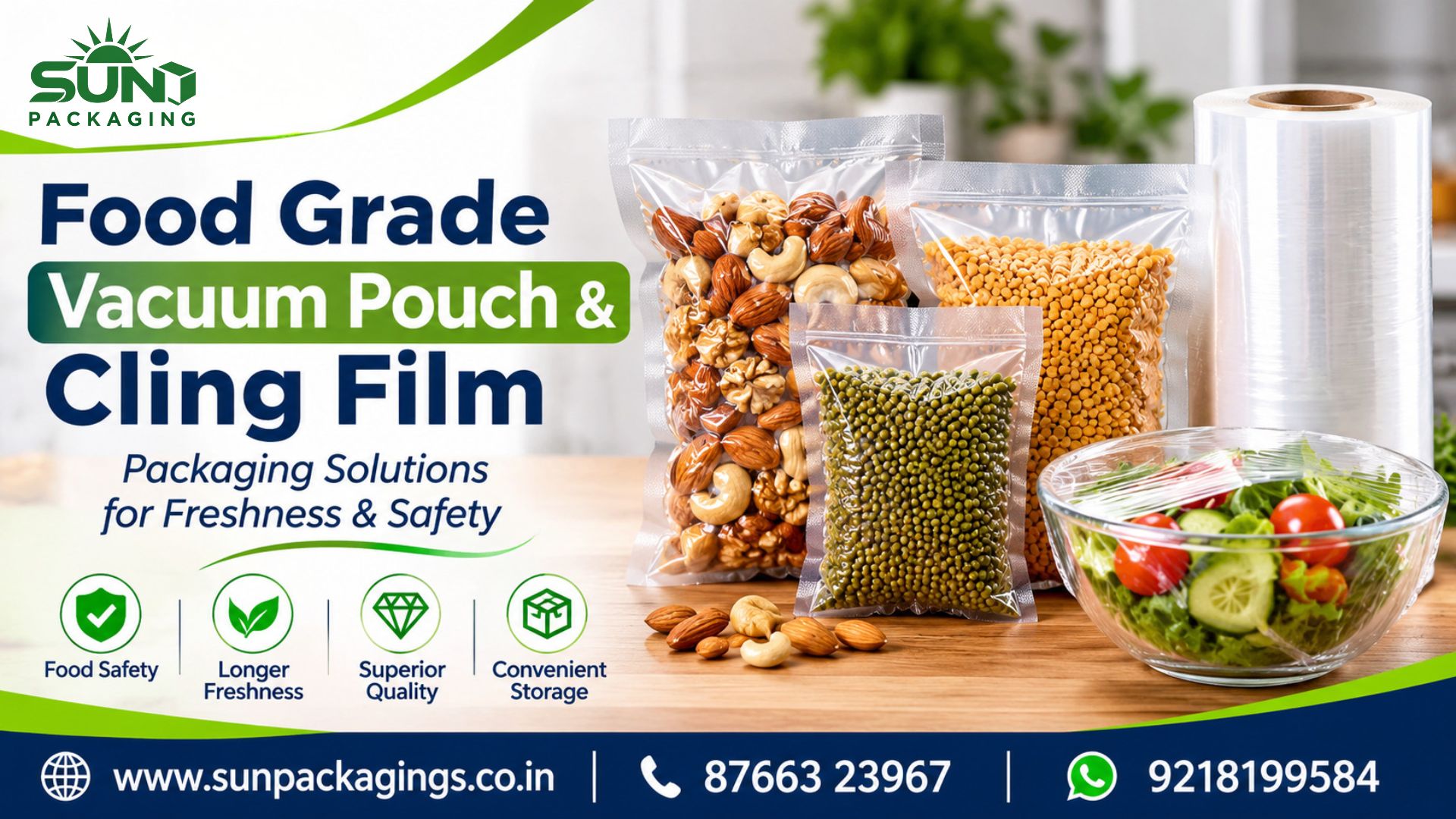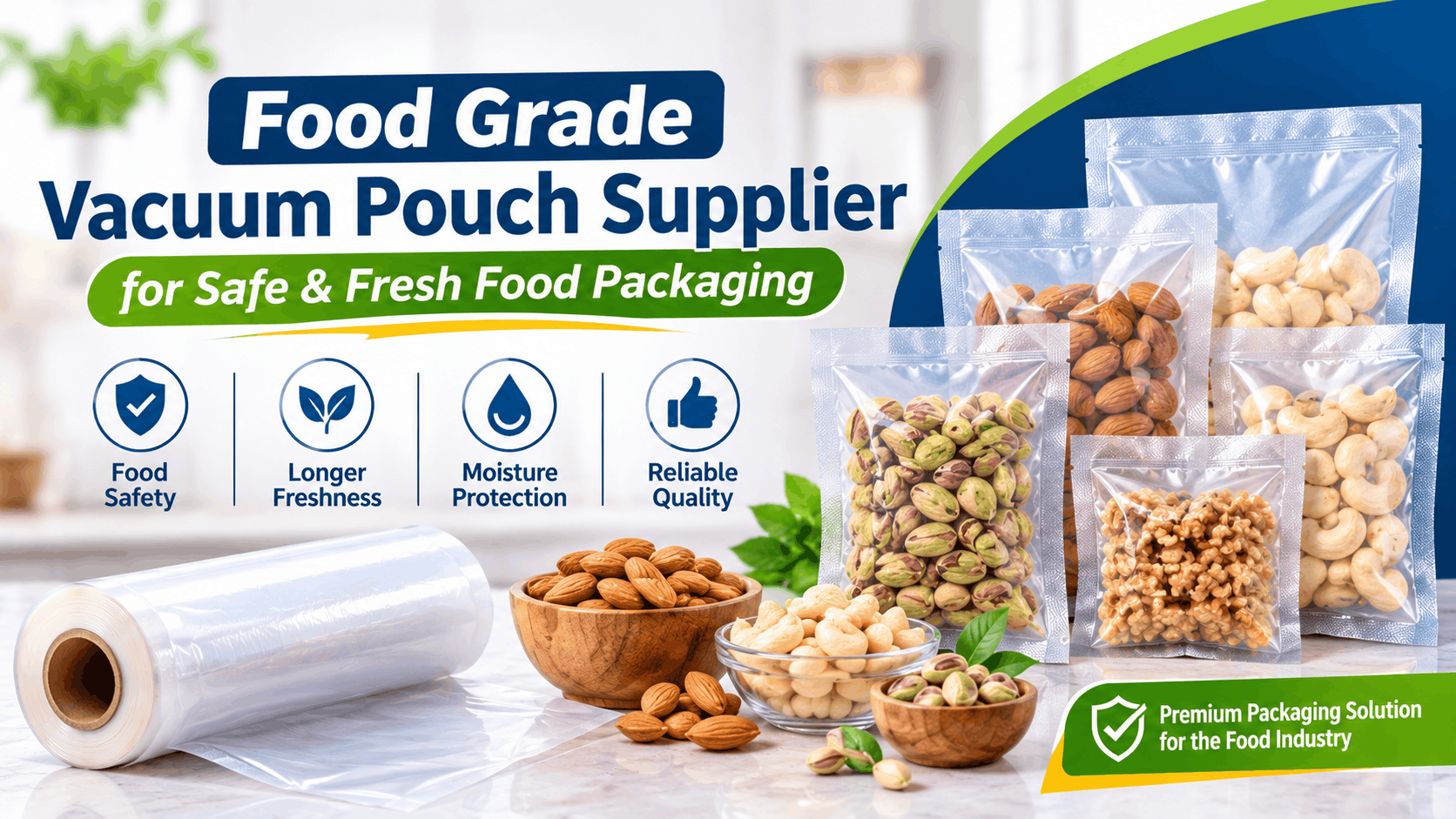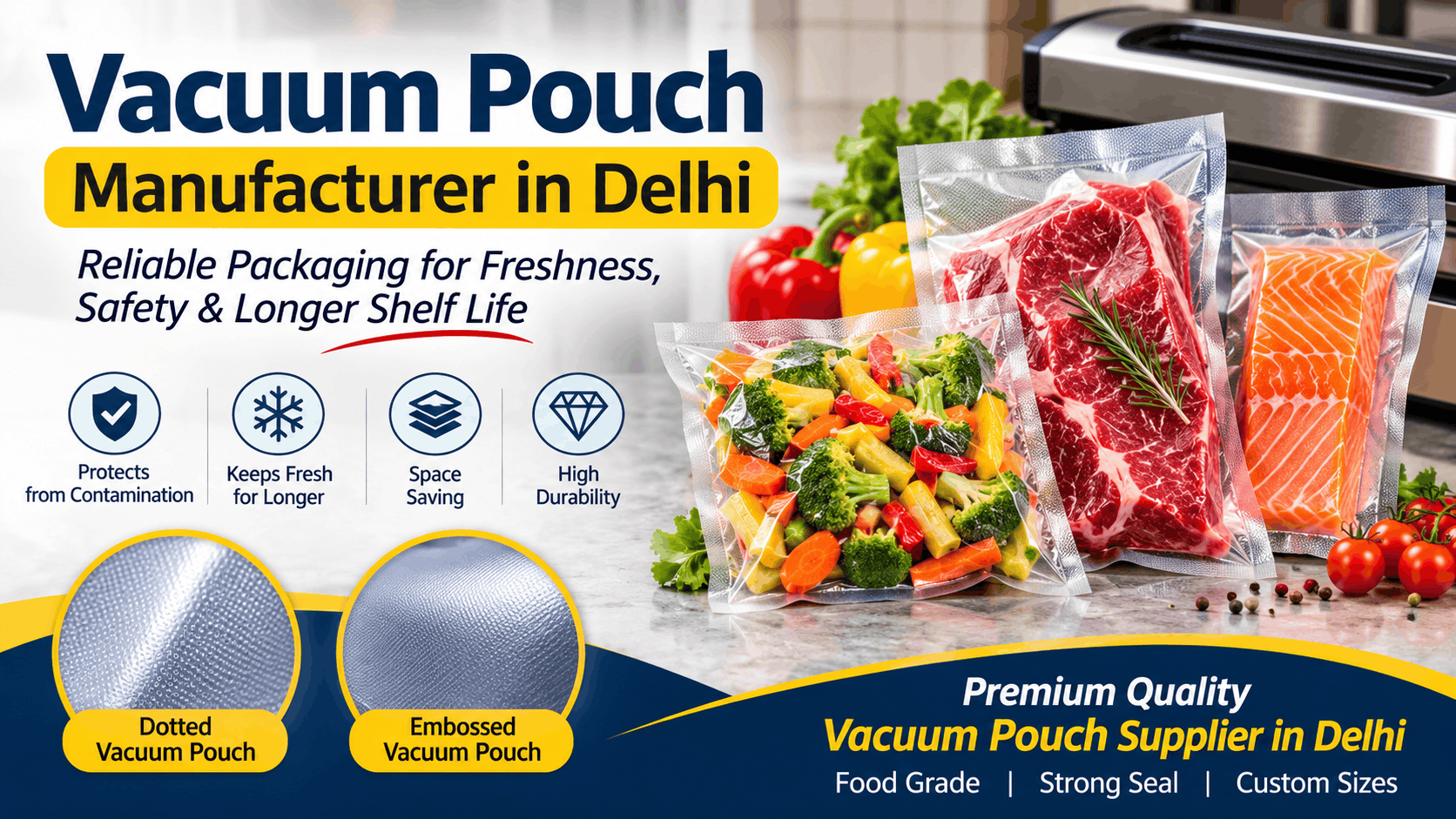
Imagine opening a storage space and finding every packaged product neatly arranged, compact and protected. No unnecessary air, no wasted space and no compromised product quality. This is the idea behind brick-shaped vacuum packaging.
As packaging requirements continue to evolve, businesses are looking for solutions that offer more than just an attractive appearance. They need packaging that protects products, supports efficient storage and makes transportation easier. Brick-shaped vacuum pouches address these requirements through their distinctive structure and vacuum-sealing technology.
In this blog, we will explore what brick-shaped vacuum pouches are, how they work, where they are used and why they are becoming an important packaging choice across different industries.
What Are Brick-Shaped Vacuum Pouches?
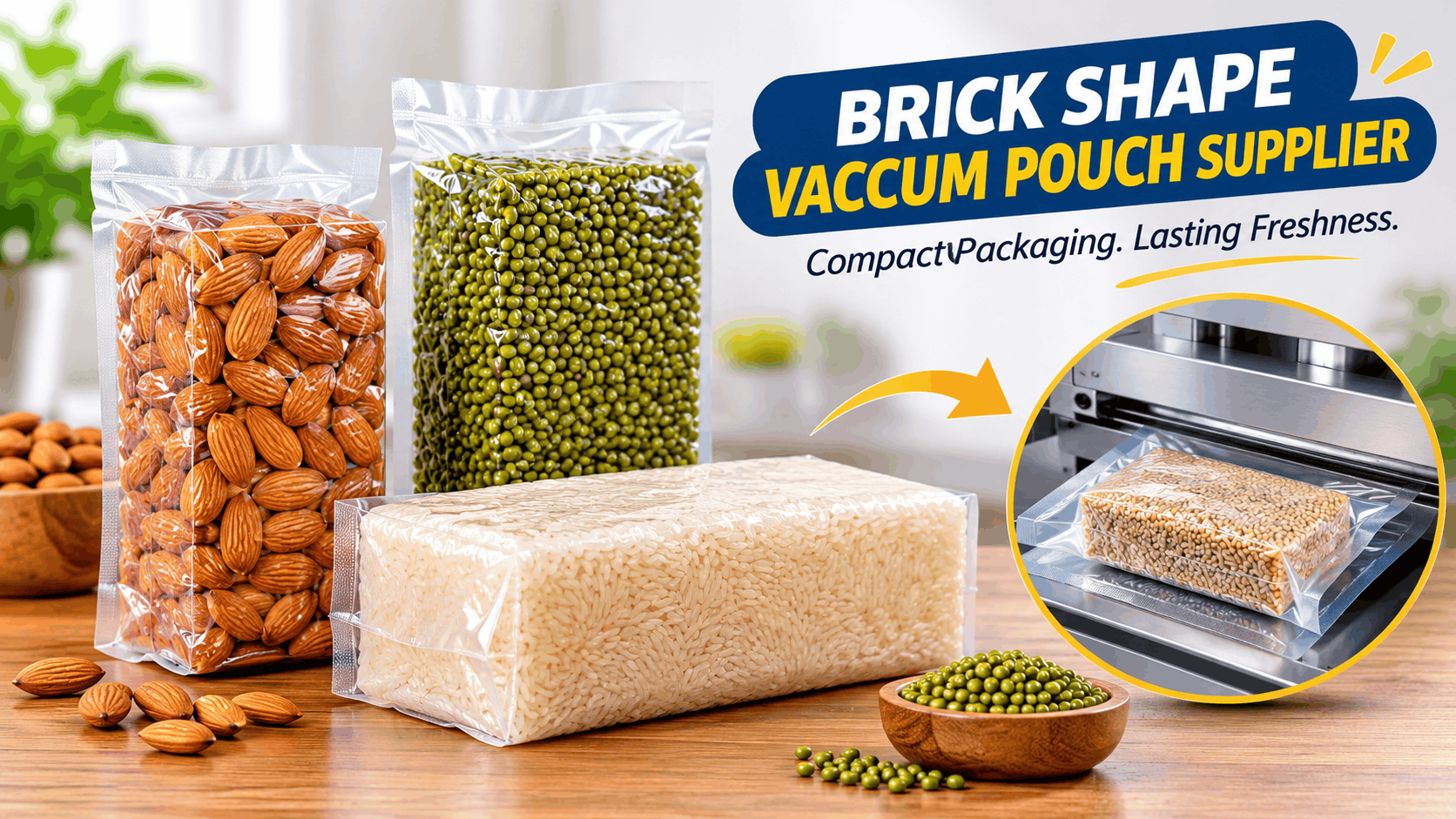
Brick-shaped vacuum pouches are specially designed flexible packaging bags that form a compact, rectangular or brick-like shape when filled and vacuum sealed. Their structure helps create a neat, uniform package that can be stacked and stored efficiently.
Unlike conventional packaging bags, which may retain excess air and take up irregular space, vacuum packaging removes much of the air from inside the pouch before sealing.
This packaging approach is particularly useful for products that require protection from oxygen exposure, moisture and external contamination. The final package also offers a clean and organized appearance, making product handling more convenient.
How Does Brick-Shaped Vacuum Packaging Work?
The packaging process combines flexible barrier materials with vacuum-sealing technology.
Here is how it generally works:
- Product Filling: The product is placed inside a suitable vacuum pouch.
- Air Removal: A vacuum packaging machine extracts air from the pouch.
- Heat Sealing: The opening is sealed to create a secure closure.
- Shape Formation: The product settles into a compact brick-like form, depending on its characteristics and the pouch design.
- Storage and Distribution: The sealed package can be arranged for convenient handling, stacking and transportation.
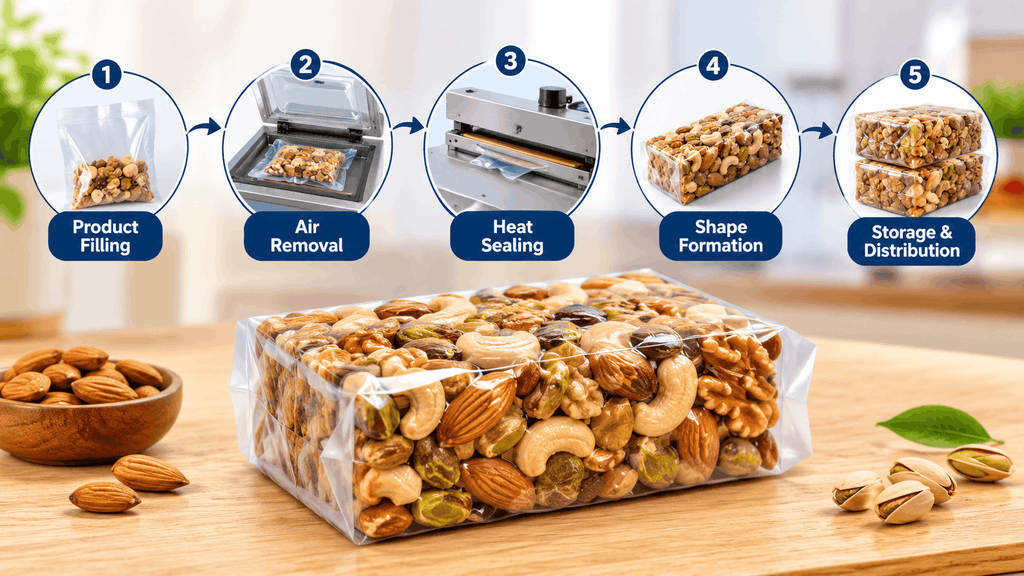
The resulting package helps reduce the amount of oxygen inside, which can slow down certain oxidation-related quality changes.
Why Is Material Selection Important?
The performance of a vacuum pouch depends greatly on the materials used in its construction.
Many high-barrier vacuum pouches use multilayer structures that combine different plastic materials to achieve the required strength, flexibility and barrier performance.
For example, commonly used materials include:
- Polyethylene (PE): Provides flexibility and supports reliable heat sealing.
- Polyamide (PA/Nylon): Offers mechanical strength and resistance to punctures.
- Barrier Layers: Depending on the application, additional barrier materials may help reduce oxygen and moisture transmission.
Some advanced vacuum packaging solutions use multilayer co-extruded films, including seven-layer structures.
The right material combination depends on the product, storage conditions, packaging machinery and required shelf-life performance.
Key Benefits of Brick-Shaped Vacuum Pouches
1. Better Space Management
The rectangular shape makes packages easier to arrange in storage areas. Uniform packaging can help businesses organize cartons, shelves and warehouse inventory more effectively.
2. Reduced Oxygen Exposure
Vacuum sealing removes much of the air from inside the pouch. This helps reduce oxygen exposure, which is important for products that are sensitive to oxidation.
3. Improved Product Protection
Suitable multilayer barrier materials can help protect packaged products against external moisture, oxygen and contamination, depending on the pouch specifications.
4. Convenient Transportation
Compact and uniform packages can make product stacking, carton arrangement and transportation planning easier.
5. Product Freshness and Quality
For suitable food applications, reducing oxygen exposure can help preserve flavour, aroma and other quality characteristics. However, actual shelf life depends on the product, processing, storage temperature and packaging barrier properties.
6. Professional Packaging Appearance
The neat brick-like structure creates a clean and organized presentation. It also helps businesses maintain consistency across packaged product ranges.
Where Are Brick-Shaped Vacuum Pouches Used?
Brick-shaped vacuum packaging can be useful across several industries, particularly where compact packaging and product protection are important.
1. Dry Fruits and Nuts
Almonds, cashews, pistachios, walnuts and other dry fruits can benefit from packaging that helps limit oxygen exposure and preserve their quality.
2. Rice and Pulses
Rice, lentils and selected grain products can be packed in compact formats for convenient storage and distribution, provided the pouch design suits the product.
3. Coffee and Tea
Coffee beans, tea leaves and selected powdered products require packaging that helps preserve aroma and protect against environmental exposure.
4. Spices and Food Powders
Masala blends, seasoning powders and other dry food ingredients can use suitable barrier pouches to help maintain product quality.
5. Dairy Products
Certain dairy products, including cheese and paneer, may use vacuum packaging to reduce exposure to air and support their storage requirements.
6. Industrial Components
Small engineering components and selected metal products can also benefit from vacuum packaging when protection against moisture and environmental exposure is required.
Brick-Shaped Vacuum Pouches vs. Conventional Packaging
Understanding the difference between packaging formats helps businesses select the right solution.
| Feature | Brick-Shaped Vacuum Pouch | Conventional Pouch |
|---|---|---|
| Package shape | Compact and brick-like | Flexible and variable |
| Air removal | Designed for vacuum sealing | Depends on packaging type |
| Storage | Easier uniform stacking | May occupy irregular space |
| Product protection | Depends on barrier material and sealing | Depends on material and design |
| Appearance | Neat and structured | Varies by pouch style |
The best option depends on the product’s characteristics, packaging objectives and distribution requirements.
How to Choose the Right Brick-Shaped Vacuum Pouch?
Selecting packaging should involve more than comparing prices or appearances. Businesses should evaluate several technical factors before making a decision.
Material Structure: Select a suitable multilayer film based on the required oxygen and moisture barrier.
Thickness: The pouch thickness should match the product’s weight, sharpness and handling requirements.
Pouch Dimensions: The width, length and capacity should accommodate the product while allowing proper sealing and shape formation.
Sealing Compatibility: Check whether the pouch material is compatible with the available vacuum packaging machine.
Product Requirements: Food products, industrial components and other materials may require different packaging specifications.
Storage Conditions: Consider whether products will be stored at room temperature, under refrigeration or in other controlled conditions.
Food-Contact Compliance: For food applications, ensure that the packaging materials comply with applicable food-contact regulations.
What Should Businesses Consider Before Switching to Vacuum Packaging?
Vacuum packaging is useful, but it is not a universal solution for every product.
Products with sharp edges may require additional puncture resistance. Delicate products may need careful vacuum settings to prevent crushing. Moisture-sensitive products may require additional barrier considerations.
Food businesses should also understand that vacuum sealing does not automatically make food safe or eliminate microorganisms. Appropriate food handling, processing, temperature control and storage practices remain essential.
Choosing the correct packaging structure is therefore just as important as choosing the vacuum packaging machine.
Conclusion
Brick-shaped vacuum pouches represent a practical combination of packaging design and preservation technology. Their compact structure, vacuum-sealing capability and adaptable multilayer materials make them suitable for a wide range of food and industrial applications.
From dry fruits and grains to spices, dairy products and selected engineering components, the right vacuum pouch can support better product protection, organized storage and efficient distribution.
For businesses exploring this packaging format, working with an experienced BRICK SHAPE VACCUM POUCH SUPPLIER can help identify suitable pouch dimensions, material structures and specifications according to individual product requirements.
Ultimately, good packaging is not simply about covering a product. It is about protecting its value from production to its final destination.